
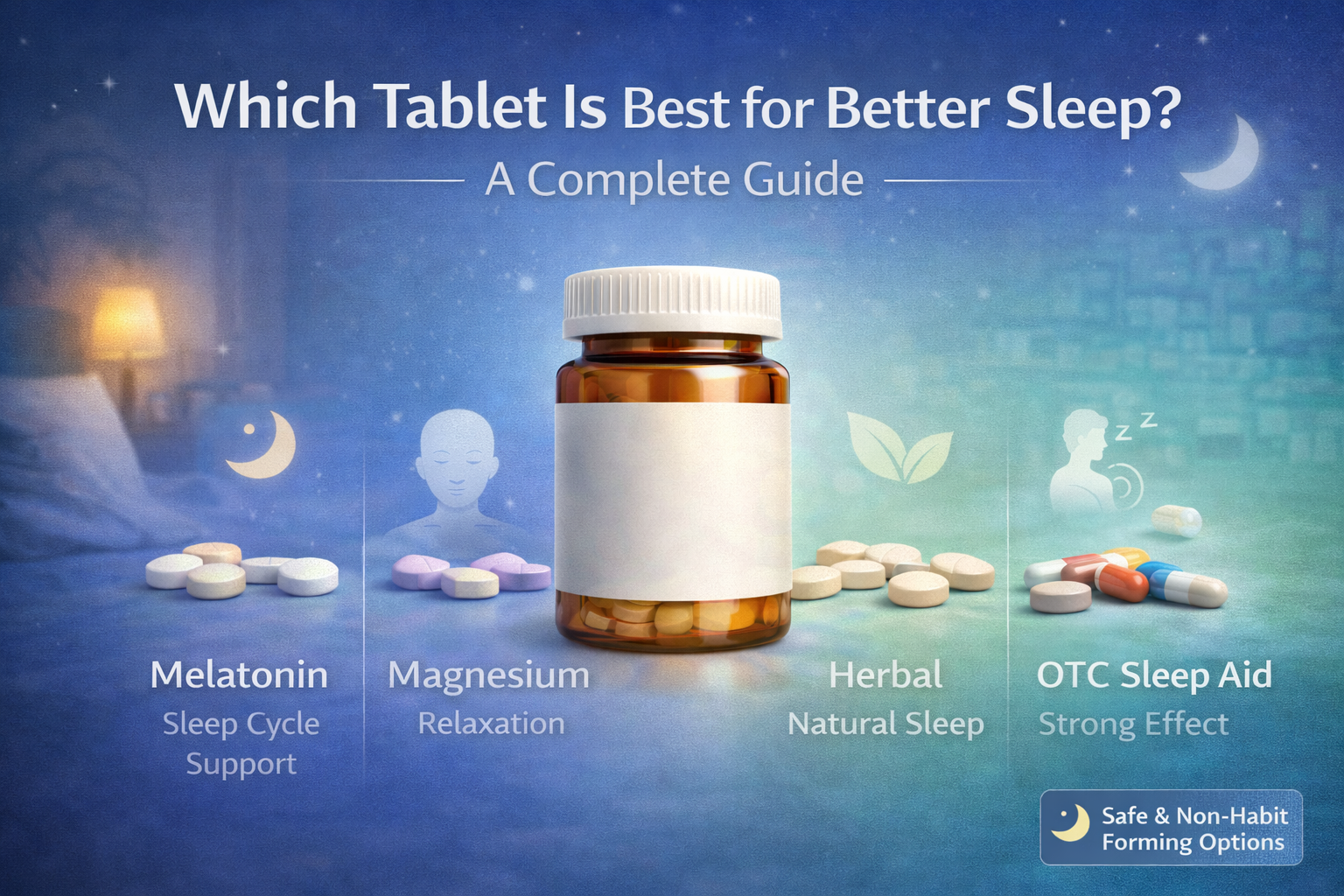
Sleep is one of the most important pillars of health, yet millions of people struggle to get proper rest every night. Whether it’s difficulty falling asleep, staying asleep, or waking up too early, poor sleep can affect your mood, productivity, and overall well-being. Many people search for the “best tablet for sleep,” but the truth is more nuanced—different medications work for different conditions, and choosing the right one depends on your specific needs.
In this detailed guide, we’ll explore the most commonly used sleep medications, how they work, and which options may be best suited for better sleep. Each section explains one approach in a simple, paragraph-wise format so you can understand your options clearly.
1. Understanding Insomnia Before Choosing Any Tablet
Before selecting any sleep tablet, it is important to understand the root cause of your sleep problem. Insomnia can be short-term (acute) or long-term (chronic), and it may be triggered by stress, anxiety, lifestyle habits, or underlying medical conditions.
Doctors usually evaluate your sleep pattern, daily routine, and mental health before recommending any medication. Treating the cause is often more effective than simply masking the symptoms with a pill.
2. Insomnia and Its Common Symptoms
Insomnia is the most common sleep disorder and includes symptoms like difficulty falling asleep, frequent waking, and non-restorative sleep. People may also feel tired during the day, have trouble concentrating, or experience irritability.
Understanding these symptoms helps determine whether you need medication or lifestyle changes. Not every case of insomnia requires tablets, but moderate to severe cases may benefit from medical treatment.
3. Zolpidem (Ambien) for Quick Sleep Onset
Zolpidem is one of the most commonly prescribed sleep medications. It works by slowing brain activity and helping you fall asleep faster, often within 15–30 minutes of taking it.
This medication is typically recommended for short-term use, especially for people who struggle to fall asleep quickly. However, it should be taken only when you can dedicate a full night to sleep.
4. Eszopiclone (Lunesta) for Staying Asleep
Eszopiclone is another sleep aid that helps both with falling asleep and staying asleep throughout the night. It has a longer duration of action compared to some other medications.
Doctors may prescribe it for individuals who wake up frequently during the night. It can be used for longer periods than some alternatives, but still requires monitoring.
5. Zaleplon (Sonata) for Short-Term Sleep Issues
Zaleplon is a fast-acting sleep medication with a very short half-life. It is ideal for people who have trouble falling asleep but do not want next-day drowsiness.
Because it leaves the body quickly, it is less likely to cause a “hangover” effect. However, it may not be effective for those who wake up during the night.
6. Melatonin Supplements for Natural Sleep Support
Melatonin is a natural hormone that regulates the sleep-wake cycle. Supplements are often used to treat jet lag, shift work sleep disorder, or mild insomnia.
It is considered one of the safest options, especially for people looking for a non-prescription solution. However, its effectiveness may vary depending on the individual.
7. Diphenhydramine (OTC Sleep Aid)
Diphenhydramine is commonly found in over-the-counter sleep aids. It works by causing drowsiness and is often used for occasional sleeplessness.
While it can help in the short term, it is not recommended for long-term use due to side effects like dry mouth, dizziness, and tolerance.
8. Doxylamine for Temporary Sleep Problems
Doxylamine is another antihistamine used as a sleep aid. It is slightly stronger than diphenhydramine and can help people fall asleep faster.
However, it may cause next-day grogginess, especially in older adults. It should be used cautiously and not as a long-term solution.
9. Trazodone for Sleep and Anxiety
Trazodone is an antidepressant that is often prescribed off-label for insomnia. It helps improve sleep quality, especially in people with anxiety or depression.
Unlike traditional sleeping pills, it has a lower risk of dependency, making it a preferred option for long-term use in some patients.
10. Mirtazapine for Chronic Sleep Issues
Mirtazapine is another antidepressant that can promote sleep by causing sedation. It is particularly useful for individuals who also experience depression or weight loss.
It may increase appetite and cause weight gain, so doctors carefully evaluate its suitability before prescribing it.
11. Lorazepam and Other Benzodiazepines
Benzodiazepines like lorazepam are sometimes used for short-term insomnia treatment. They calm the nervous system and help induce sleep quickly.
However, they carry a risk of dependence and are generally not recommended for long-term use. Doctors prescribe them cautiously and for limited durations.
12. Diazepam for Relaxation and Sleep
Diazepam may be used when insomnia is linked to anxiety or muscle tension. It has a longer-lasting effect compared to some other medications.
Because of its sedative properties, it can help improve sleep, but it also requires strict medical supervision.
13. Non-Medication Approaches for Better Sleep
While tablets can help, they are not always the best long-term solution. Lifestyle changes play a crucial role in improving sleep quality.
Practices like maintaining a regular sleep schedule, reducing screen time, and creating a comfortable sleep environment can significantly improve sleep without medication.
14. Cognitive Behavioral Therapy for Insomnia (CBT-I)
CBT-I is a highly effective, non-drug treatment for chronic insomnia. It focuses on changing thoughts and behaviors that interfere with sleep.
Many experts consider CBT-I more effective than medication in the long run, especially for people with persistent sleep issues.
15. Choosing the Best Tablet for Your Needs
There is no single “best” sleep tablet for everyone. The right choice depends on your symptoms, medical history, and lifestyle.
For example, if you struggle to fall asleep, a fast-acting medication may be ideal. If you wake up frequently, a longer-acting option may be better.
Conclusion
Finding the best tablet for better sleep is not about choosing the strongest medication but selecting the safest and most appropriate option for your condition. From prescription drugs like Zolpidem and Eszopiclone to natural options like Melatonin, there are many choices available.
However, medication should always be combined with healthy sleep habits and used under medical supervision. With the right approach, you can improve your sleep quality and enjoy better overall health.
FAQs
1. Which tablet is best for sleep?
The best tablet depends on your condition. Zolpidem is commonly used for falling asleep, while eszopiclone helps with staying asleep.
2. Is melatonin safe for daily use?
Melatonin is generally safe for short-term use, but long-term use should be discussed with a doctor.
3. Are sleeping pills addictive?
Some medications, especially benzodiazepines, can be habit-forming if used for a long time.
4. Can I take sleep tablets without a prescription?
Over-the-counter options are available, but prescription medications should only be taken under medical supervision
Disclaimer
This content is for educational purposes only and should not be considered medical advice. Always consult a qualified healthcare professional before starting, stopping, or changing any sleep medication. Misuse of sleep tablets can lead to serious health risks, including dependence and side effects.