
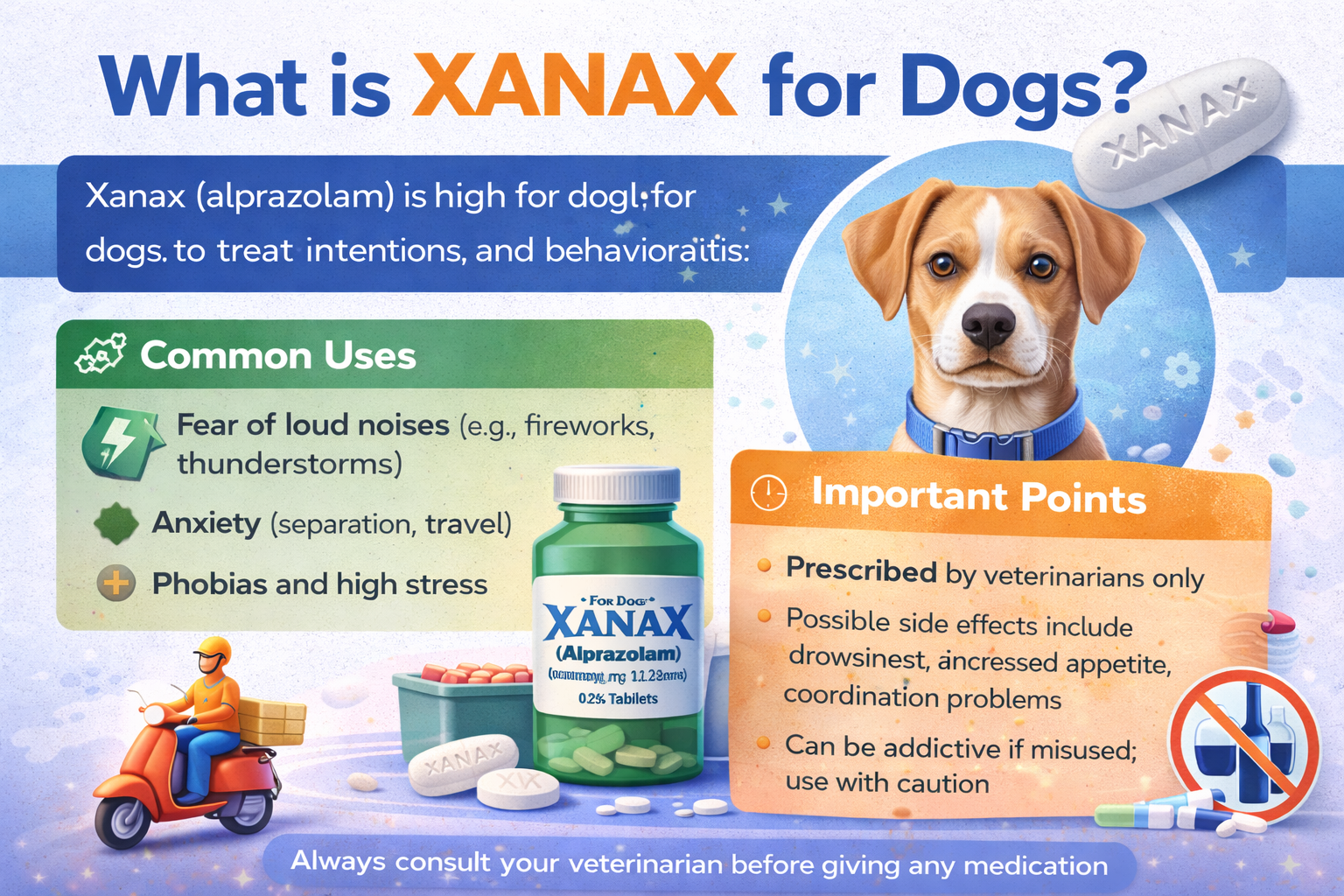
Xanax, known generically as Alprazolam, is widely prescribed in humans to treat anxiety and panic disorders. However, under veterinary supervision, it may also be used in dogs for certain behavioral and medical conditions. While many pet owners feel concerned when they hear about giving an anti-anxiety medication to their dog, veterinarians sometimes recommend it in carefully measured doses for specific situations.
The use of Xanax in dogs must always be guided by a licensed veterinarian. Although it can be effective in reducing anxiety and stress-related behaviors, it is not suitable for every dog. Understanding how it works, potential side effects, and the risk of dependency is essential before considering treatment.
Why Would a Vet Prescribe Xanax for Dogs?
Dogs can experience anxiety and stress just like humans. Some common conditions where a veterinarian may consider prescribing Xanax include:
- Separation anxiety
- Noise phobias (thunderstorms, fireworks)
- Travel anxiety
- Vet visit stress
- Panic attacks
- Certain seizure disorders (in some cases)
Dogs with severe separation anxiety may show destructive behaviors such as chewing furniture, barking excessively, pacing, or attempting to escape. In such cases, Xanax for dogs may be used as part of a broader behavioral management plan.
Similarly, during thunderstorms or fireworks displays, some dogs become extremely fearful. They may shake, hide, drool excessively, or even injure themselves trying to escape. Xanax for dogs can help calm their nervous system during these stressful events.
How Xanax Works in Dogs
Xanax belongs to a class of medications called benzodiazepines. It works by affecting neurotransmitters in the brain—specifically gamma-aminobutyric acid (GABA). GABA reduces nerve activity, helping to calm the brain.
When prescribed correctly, Xanax for dogs works in the following ways:
- It alters brain activity that triggers fear and panic.
- It reduces excessive nervous tension.
- It decreases symptoms of anxiety and terror.
- It produces a calming, sometimes mildly sedative effect.
- It may increase appetite in anxious dogs.
The medication typically begins working within 30 to 60 minutes after administration. The calming effect may last several hours depending on the dosage and the dog’s metabolism.
Is Xanax Safe for Dogs?
When given under veterinary supervision, Xanax for dogs is generally considered safe for short-term or situational use. However, dosage is extremely important. Dogs metabolize medications differently than humans, so giving a human dose can be dangerous.
Veterinarians determine the correct dosage based on:
- The dog’s weight
- Age
- Overall health condition
- Severity of anxiety
- Other medications being taken
Owners should never give their dog Xanax without a prescription. Even small dosing errors can result in complications.
Common Side Effects of Xanax in Dogs
Although Xanax for dogs can be helpful, side effects may occur. Monitoring your dog’s behavior after giving the medication is essential.
Common side effects include:
- Sedation or drowsiness
- Lethargy
- Confusion
- Increased thirst
- Dry mouth
- Poor coordination
- Weakness
Most side effects are mild and temporary. However, if your dog appears severely disoriented, collapses, or shows unusual behavior, contact your veterinarian immediately.
Drug Interactions
Xanax can interact with other medications. This is why it is important to inform your veterinarian about:
- Antibiotics
- Beta-blockers
- Pain medications
- Anti-seizure drugs
- Supplements
- Herbal remedies
Some combinations may increase sedation or alter the drug’s effectiveness. Proper communication with your vet ensures safe use of Xanax for dogs.
Can Xanax Have the Opposite Effect?
In rare cases, Xanax may produce paradoxical reactions. Instead of calming the dog, it may cause:
- Increased excitement
- Agitation
- Hyperactivity
- Aggression
If this occurs, discontinue use only under veterinary guidance and report the reaction immediately.
Dependency and Withdrawal in Dogs
Like in humans, prolonged use of benzodiazepines may lead to dependency in dogs. While Xanax for dogs is often prescribed for short-term situations, extended use increases the risk of tolerance and dependence.
Signs of dependency may include:
- Needing higher doses for the same calming effect
- Behavioral changes when the medication wears off
If Xanax has been given regularly over a long period, it should never be stopped abruptly. Sudden withdrawal may lead to:
- Vomiting
- Tremors or shaking
- Heightened anxiety
- Light sensitivity
- Seizures (in rare cases)
Veterinarians typically recommend tapering the dose gradually to prevent withdrawal symptoms.
Alternative Treatments for Anxiety in Dogs
Xanax is not always the first choice for treating anxiety in dogs. Vets may recommend other options first, such as:
- Behavioral training
- Desensitization therapy
- Environmental modifications
- Calming pheromone products
- Non-sedating anxiety medications
Medication is often part of a larger treatment strategy rather than a standalone solution.
When Should You Contact the Vet?
You should contact your veterinarian immediately if your dog experiences:
- Severe sedation
- Difficulty breathing
- Persistent vomiting
- Extreme agitation
- Loss of coordination
- Signs of overdose
Prompt medical attention can prevent complications.
Conclusion
Xanax for dogs can be an effective treatment option for managing anxiety, panic disorders, and certain stress-related behaviors when prescribed and monitored by a veterinarian. It works by calming brain activity and reducing excessive nervous system stimulation. For dogs experiencing separation anxiety, noise phobias, or situational stress, the medication may significantly improve quality of life.
However, Xanax is not without risks. Side effects such as sedation, confusion, and coordination issues may occur. In rare cases, paradoxical reactions or dependency can develop. Long-term use should always be carefully evaluated, and abrupt discontinuation should be avoided.
The most important takeaway is that Xanax for dogs should never be given without veterinary guidance. Every dog is unique, and safe dosing depends on multiple factors. Responsible pet ownership includes close communication with your vet and careful monitoring of your pet’s behavior during treatment.
When used appropriately, Xanax for dogs can be a helpful tool—but it must always be part of a well-supervised care plan.
Frequently Asked Questions (FAQs)
1. Is Xanax safe for dogs?
Yes, when prescribed and monitored by a licensed veterinarian.
2. What is Xanax used for in dogs?
It is commonly used to treat anxiety, panic attacks, noise phobias, and sometimes seizures.
3. How quickly does Xanax work in dogs?
It typically begins working within 30 to 60 minutes.
4. Can Xanax make my dog sleepy?
Yes, sedation is one of the most common side effects.
5. Can dogs become addicted to Xanax?
Long-term use may lead to dependency, which is why short-term use is usually recommended.
6. What happens if I stop giving Xanax suddenly?
Abrupt discontinuation may cause withdrawal symptoms such as shaking or vomiting.
7. Can Xanax interact with other medications?
Yes. Always inform your veterinarian about all medications and supplements your dog is taking.
8. Can Xanax increase appetite in dogs?
Some dogs may experience increased appetite as a side effect.
9. Is Xanax the first choice for dog anxiety?
Not always. Vets often explore behavioral therapies or alternative medications first.
10. What should I do if my dog shows unusual behavior after taking Xanax?
Contact your veterinarian immediately for guidance.
Disclaimer
This article is for informational purposes only and does not replace professional veterinary advice. Never give Xanax or any prescription medication to your dog without consulting a licensed veterinarian. Dosage, safety, and suitability vary based on your pet’s size, health condition, and medical history. Misuse or incorrect dosing can result in serious health complications. Always seek immediate veterinary care if your dog shows signs of severe side effects or overdose.
Also Read:- How long does Tramadol stay in your system?
Also Read:- What is Soma medication?
Also Read:- Top 5 Prescription Pain Medications: A Complete Pain Relief Guide

Pingback: How to Securely Buy Xanax Online – Easy Step Guide