
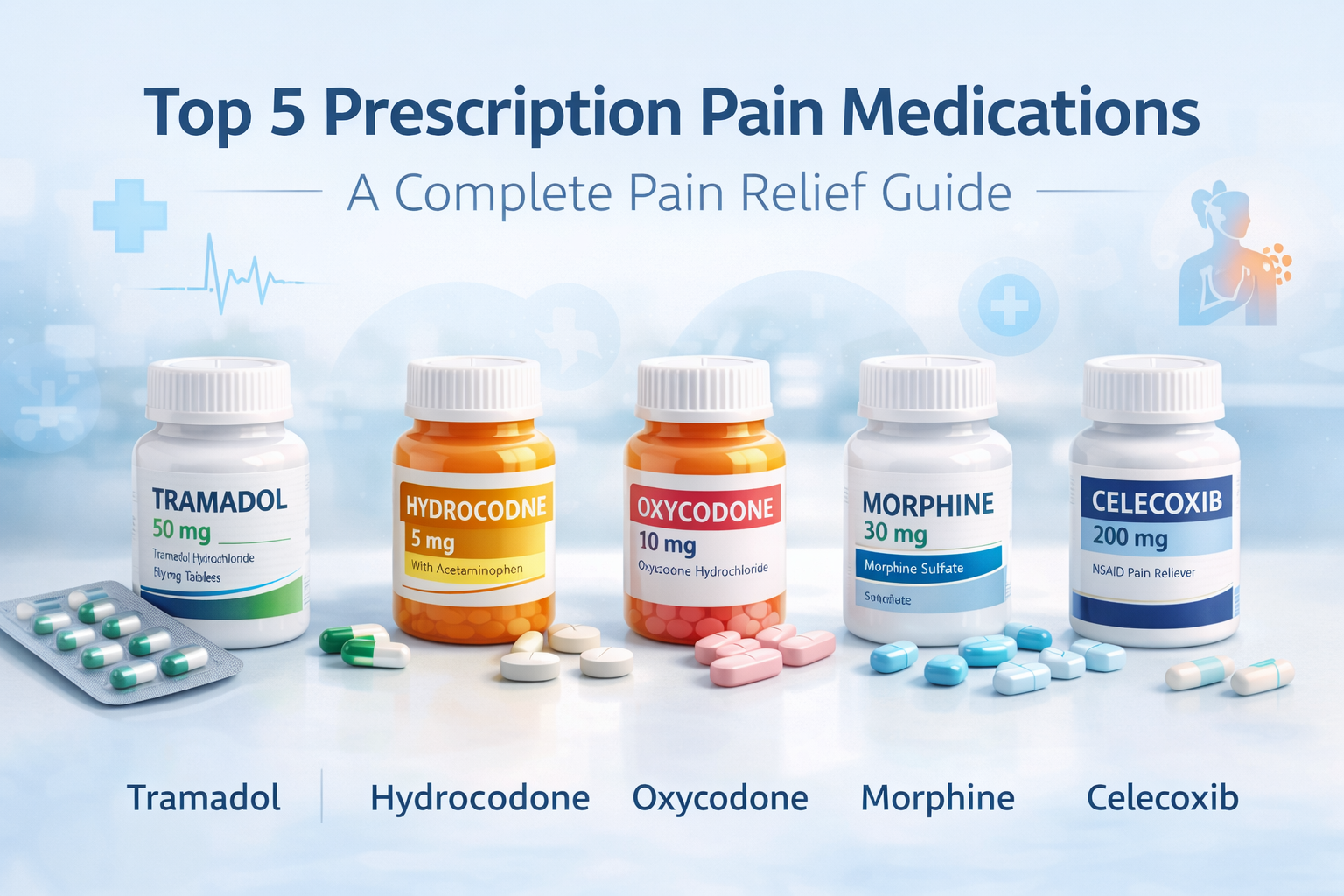
Pain affects people of all ages and is one of the leading reasons individuals seek medical care. Understanding prescription pain medications is essential for those dealing with moderate to severe discomfort. While mild pain can often be treated with over-the-counter remedies, ongoing or intense pain usually requires medical supervision and stronger treatment options.
Prescription pain medications are specifically developed to address different pain types, including post-operative pain, chronic illnesses, injury-related discomfort, and nerve pain. This guide reviews five commonly prescribed pain medicines—Oxycodone, Oxycontin ER, Tramadol, Hydrocodone, and Dilaudid—explaining how they work, their benefits, and key considerations before use.

Overview of Prescription Pain Medications
Prescription pain relievers, also known as analgesics, are used when standard painkillers fail to provide adequate relief. These medications vary in strength, duration, and mechanism of action. Opioids are among the most effective options for managing moderate to severe pain, particularly when pain interferes with daily activities or recovery.
Many patients explore treatments such as Oxycodone or Tramadol when searching for dependable pain control. Choosing the right medication depends on several factors, including pain intensity, duration, medical history, and individual tolerance. Proper education and guidance are essential for safe and effective pain management.
Oxycodone – Rapid Relief for Moderate to Severe Pain
Oxycodone is a commonly prescribed opioid known for its fast-acting pain relief. It is frequently used after surgery, for serious injuries, and for chronic conditions such as cancer-related pain. The medication works by interacting with opioid receptors in the brain and spinal cord, reducing how pain signals are perceived.
Patients often describe the effects of Oxycodone as calming, with noticeable pain reduction. Some may experience drowsiness or mild euphoria. Oxycodone is available in both immediate-release forms for quick relief and extended-release versions for ongoing pain control, making it suitable for a wide range of pain conditions.
Oxycontin ER – Long-Lasting Control for Chronic Pain
Oxycontin ER is the extended-release form of Oxycodone, designed for continuous pain management. Unlike short-acting versions, it delivers consistent medication levels for up to 12 hours, reducing the need for frequent dosing.
This formulation is often prescribed for chronic pain conditions such as long-term back pain, joint disorders, or cancer-related pain. By maintaining stable relief throughout the day, Oxycontin ER helps patients function more comfortably and avoid sudden pain flare-ups.
Tramadol – Balanced Relief for Moderate and Nerve Pain
Buy Tramadol online offers a different approach to pain management by combining mild opioid effects with action on serotonin and norepinephrine pathways. This dual mechanism makes it particularly useful for nerve pain as well as moderate musculoskeletal discomfort.
It is commonly prescribed for conditions like fibromyalgia, post-surgical pain, and chronic joint pain. Available in immediate-release and extended-release forms, Tramadol provides flexible dosing options and is often chosen for patients who require effective pain relief without stronger opioids.
Hydrocodone – Dependable Option for Severe Pain
Hydrocodone is a strong opioid frequently prescribed in the United States for moderate to severe pain. It is often combined with acetaminophen to enhance pain-relieving effects. Hydrocodone works quickly and is suitable for both acute pain episodes and long-term pain management.
This medication is commonly used for injury-related pain, post-operative recovery, and chronic conditions such as arthritis. Extended-release versions allow for sustained pain control, while short-acting forms help manage sudden pain episodes.
Dilaudid – Powerful Relief for Intense Pain
Dilaudid, also known as hydromorphone, is a potent opioid reserved for severe pain that does not respond to other treatments. It is frequently used in hospital settings or for cancer-related pain requiring strong intervention.
Available in tablets, liquids, and injectable forms, Dilaudid delivers fast and intense relief. Due to its strength, careful monitoring by healthcare professionals is essential to ensure safety and prevent complications.
Pill Identification and Medication Safety
Correctly identifying prescription pain medications is important for safe use. For example, the m367 white pill is commonly recognized as Oxycodone 30 mg. Proper identification helps prevent dosing errors and supports safe medication management for patients and caregivers.
Comparing the Top 5 Pain Medications
Each of these medications serves a distinct purpose. Oxycodone is versatile and fast-acting, suitable for both acute and chronic pain. Oxycontin ER provides consistent, long-term relief. Tramadol is effective for moderate and nerve-related pain. Hydrocodone offers reliable relief for severe pain, while Dilaudid is reserved for the most intense pain cases.
Understanding these differences allows patients and providers to select the most appropriate option based on individual needs.
Safety, Risks, and Responsible Use
Although prescription pain medications are effective, they carry potential risks. Improper use can lead to dependence, overdose, or serious side effects. Patients should strictly follow prescribed dosages, avoid alcohol or sedatives, and report symptoms such as dizziness, nausea, constipation, or excessive drowsiness.
Long-term opioid use requires regular monitoring. Being informed about medication effects and following medical advice are essential for safe pain control.
Supporting Pain Relief with Holistic Approaches
Medication works best when combined with lifestyle strategies. Gentle physical activity improves mobility and reduces stiffness. Physical therapy addresses underlying pain causes, while stress-reduction techniques like meditation or yoga help lower pain perception.
A balanced diet, proper hydration, and quality sleep further support recovery and overall health. Combining these methods with prescription treatments leads to better long-term outcomes.
Conclusion
Prescription pain medications such as Oxycodone, Oxycontin ER, Tramadol, Hydrocodone, and Dilaudid play a vital role in managing moderate to severe pain. Each option offers unique benefits, from rapid relief to extended pain control.
Understanding medication effects, proper identification, and responsible use ensures safer treatment. When combined with healthy lifestyle practices, these medications can significantly improve comfort, mobility, and overall quality of life for adults managing acute or chronic pain.
Frequently Asked Questions
How does Oxycodone affect the body?
Oxycodone reduces pain signals and may cause relaxation or mild drowsiness. Some individuals experience lightheadedness, which is why monitoring is important.
What is Oxycontin ER used for?
It is an extended-release form of Oxycodone designed to provide steady pain relief for up to 12 hours.
What does the m367 white pill represent?
The m367 white tablet is commonly identified as Oxycodone 30 mg.
How do I choose the right pain medication?
The choice depends on pain type, severity, duration, and personal health factors. Medical guidance is essential.
Are Tramadol, Hydrocodone, and Dilaudid safe for long-term use?
Long-term use requires careful supervision, appropriate dosing, and regular follow-ups to reduce risks.



Pingback: What Is a Popular Medication for Pain Relief