
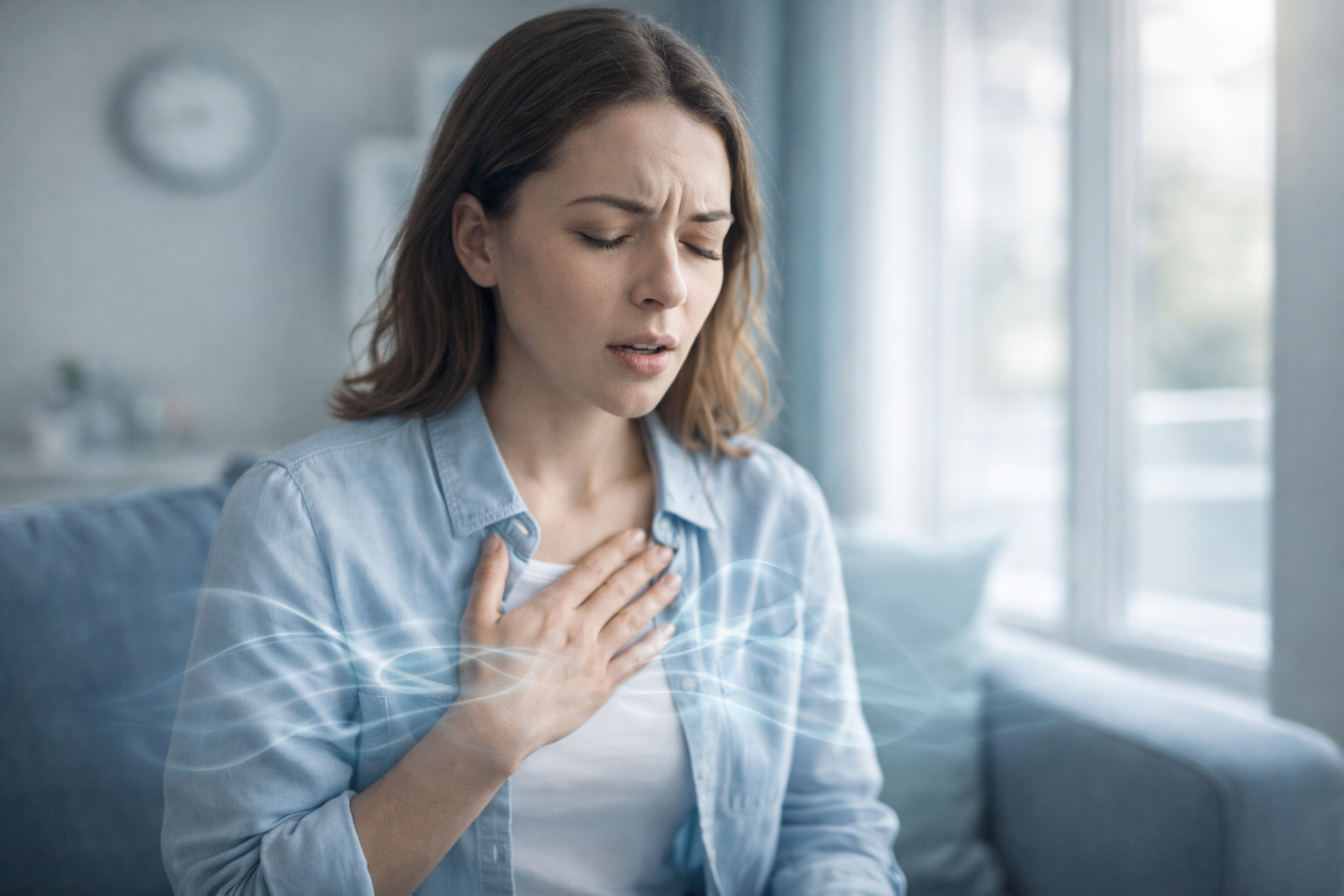
Shortness of breath is something many people experience at different times in life. It may result from medical conditions such as asthma, heart disease, or lung disorders, but it can also be triggered by anxiety. Because anxiety often produces physical symptoms that resemble serious health problems, it can be difficult to determine whether breathlessness is psychological or medical in origin.
Learning how anxiety influences breathing and recognizing its distinct signs can help you respond appropriately and manage symptoms more confidently. Below, we explore how to recognize anxiety-related breathlessness and what steps can help reduce it.

What Is Anxiety-Related Shortness of Breath?
Anxiety activates the body’s fight-or-flight response, a survival mechanism designed to prepare you for danger. During this response, breathing naturally becomes faster to increase oxygen supply to muscles.
When anxiety becomes intense or ongoing, breathing may become too rapid or shallow, leading to hyperventilation. Hyperventilation can create the sensation of not getting enough air, even though oxygen levels are adequate. This may feel like difficulty taking a full breath or persistent air hunger.
These symptoms can appear suddenly during stressful events or panic attacks, or they may linger in individuals with chronic anxiety.
Signs That Breathlessness May Be Caused by Anxiety
1. Timing of Symptoms
Breathing difficulties linked to anxiety often occur during stressful situations or emotional distress. For example, symptoms may arise before a presentation, during conflict, or in overwhelming social environments. If the breathlessness closely follows worry or fear, anxiety is a likely factor.
2. Other Anxiety Symptoms
Anxiety-related breathlessness rarely happens alone. It often appears with symptoms such as:
- Rapid heartbeat or palpitations
- Sweating or trembling
- Chest tightness
- Feelings of panic or dread
- Dizziness or lightheadedness
- Tingling sensations in hands or feet
When these symptoms occur together, anxiety may be the underlying cause.
3. Sudden Onset
Breathlessness from anxiety tends to start abruptly, especially during panic attacks. In contrast, breathing problems from conditions like asthma or heart disease often develop gradually or persist consistently.
4. Breathing Pattern Changes
Anxiety commonly causes shallow, fast breathing. This can disrupt the balance of oxygen and carbon dioxide, leading to dizziness or numbness. Physical lung conditions, however, may cause wheezing or a sensation of blocked airways.
Observing how you breathe during episodes can provide helpful clues.
5. Relief Through Breathing Exercises
If slow, controlled breathing reduces symptoms, anxiety is likely involved. A simple technique includes:
- Inhale slowly through your nose for four seconds
- Hold for four seconds
- Exhale slowly through your mouth for four seconds
- Repeat for several minutes
If symptoms improve with relaxation techniques, they are often anxiety-related.
6. Absence of Other Medical Warning Signs
Medical causes of breathlessness often include additional symptoms such as persistent coughing, wheezing, swelling in the legs, bluish lips, or extreme fatigue. If your breathlessness fluctuates with emotional stress and lacks these signs, anxiety may be responsible.
How to Manage Anxiety-Induced Breathlessness
Practice Controlled Breathing
Techniques like diaphragmatic breathing or the 4-7-8 method can help regulate breathing and reduce hyperventilation.
Use Grounding Strategies
Grounding exercises, such as the 5-4-3-2-1 method, shift attention away from fear and back to the present moment.
Try Muscle Relaxation
Progressive muscle relaxation can reduce physical tension in the chest, shoulders, and neck, easing the sensation of breathlessness.
Stay Physically Active
Regular exercise supports lung function and lowers stress levels over time, helping prevent future episodes.
Consider Professional Support
If anxiety significantly affects daily life, therapy such as cognitive-behavioral therapy (CBT) can be helpful. In some cases, healthcare providers may recommend medication.
When to Seek Medical Attention
Although anxiety frequently causes shortness of breath, medical conditions must always be ruled out. Seek immediate medical care if breathlessness:
- Is sudden and severe
- Occurs with chest pain or fainting
- Persists without clear explanation
- Is accompanied by bluish lips or confusion
When in doubt, consult a healthcare professional.
Conclusion
Breathlessness can feel alarming, especially when its cause is unclear. By paying attention to timing, associated symptoms, breathing patterns, and response to relaxation techniques, you can better understand whether anxiety may be responsible.
However, it is always safest to consult a medical professional to rule out physical causes and ensure proper care.
Also Read:- https://usacheapmedicine.com/what-is-a-popular-medication-for-pain-relief/
Disclaimer
This article is for informational and educational purposes only and does not constitute medical advice. Shortness of breath can be a symptom of serious medical conditions. Always consult a qualified healthcare provider for diagnosis, treatment, or medical concerns. If you experience severe or sudden breathing difficulties, seek emergency medical attention immediately.
Pingback: What Causes Lower Abdominal Pain in Females?