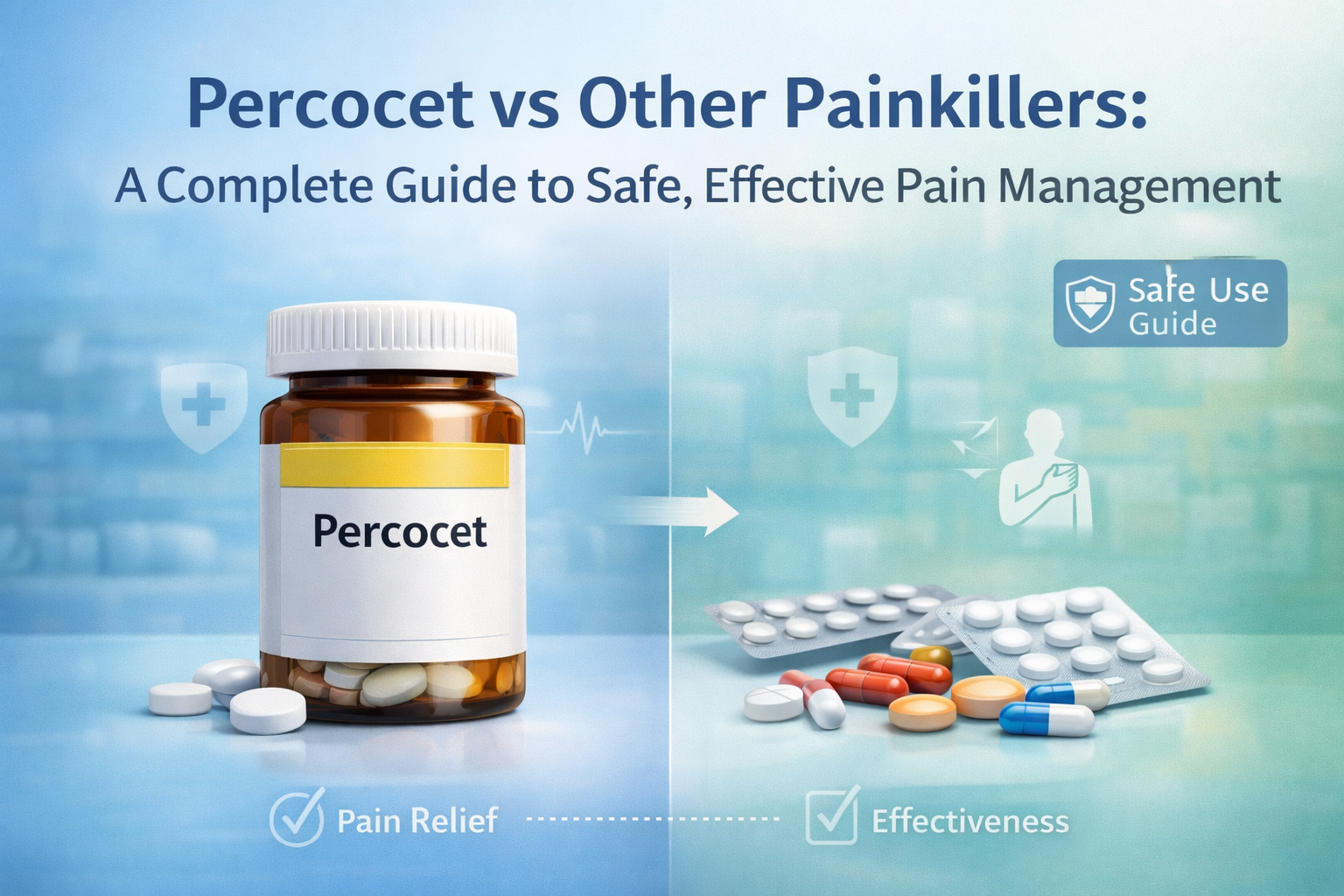
Managing pain can be challenging, especially when you are deciding between different medications. One commonly prescribed option for moderate to severe pain is Percocet. Many people want to understand how it compares to other painkillers, when it is appropriate, and how to use it safely.
This guide simplifies everything you need to know—from how Percocet works and how doctors prescribe it, to how it compares with other medications and what affects its cost without insurance. It also highlights safer alternatives and the importance of responsible, legal pain management.
What Is Percocet and How Does It Work?
Percocet is a prescription medication made from two components:
- Oxycodone – a strong opioid that reduces pain signals in the brain
- Acetaminophen – a non-opioid that enhances pain relief
Together, these ingredients provide effective relief while allowing a lower dose of opioid compared to using oxycodone alone.
Doctors usually prescribe Percocet for:
- Post-surgical pain
- Injury-related pain
- Short-term acute conditions
Because opioids affect the central nervous system, they must be used carefully to avoid risks like dependence or overdose.
How Doctors Prescribe Percocet Safely
Before prescribing Percocet, healthcare providers carefully evaluate each patient. This includes reviewing:
- Medical history
- Current medications
- Risk of addiction
- Liver health (due to acetaminophen content)
Doctors typically recommend Percocet only when other treatments are not effective. They also:
- Prescribe the lowest effective dose
- Limit duration of use
- Monitor for side effects or misuse
Since it is a controlled medication, Percocet can only be obtained with a valid prescription.
Percocet Cost Without Insurance
The cost of Percocet without insurance can vary depending on several factors:
- Pharmacy location
- Dosage strength
- Brand vs. generic versions
- Local regulations and supply
Generic versions of oxycodone/acetaminophen are usually more affordable than the brand-name drug. Patients can reduce costs by:
- Asking for generic alternatives
- Checking pharmacy discount programs
- Consulting with healthcare providers about cost-saving options
Percocet vs Non-Opioid Painkillers
Doctors often start with non-opioid medications before prescribing opioids like Percocet.
Common Non-Opioid Options
- Ibuprofen
- Acetaminophen
- Naproxen
- Topical pain relievers
These are generally safer and suitable for mild to moderate pain. However, they may not be strong enough for severe pain, which is when opioids may be considered.
Percocet vs Other Opioid Medications
Percocet is often compared with other prescription opioids:
Oxycodone (alone)
Stronger opioid effect without acetaminophen; may be used for longer-term pain but carries higher risk.
Hydrocodone (e.g., Norco, Vicodin)
Similar to Percocet in strength and use, though side effects may vary.
Morphine
Typically used in hospitals or for severe chronic pain.
Each medication has its own benefits and risks. The right choice depends on individual needs and medical history.
Side Effects Comparison
Percocet Side Effects
- Drowsiness
- Nausea
- Constipation
- Dizziness
- Risk of dependence
Non-Opioid Side Effects
- Stomach irritation
- Liver strain (acetaminophen)
- Kidney issues (long-term NSAIDs)
Other Opioids
- Respiratory depression
- Sedation
- Confusion
- Higher addiction risk
Balancing effectiveness with safety is key when choosing a pain medication.
Safer Alternatives to Percocet
Many patients can manage pain effectively without opioids. Some alternatives include:
- Prescription-strength NSAIDs
- Tramadol (weaker opioid option)
- Gabapentin (for nerve pain)
- Physical therapy
- Heat and cold therapy
- Mind-body techniques
Doctors often use a multi-modal approach, combining different treatments to reduce reliance on opioids.
When Is Percocet the Right Choice?
Percocet may be appropriate if:
- You have severe short-term pain (e.g., after surgery)
- Other medications are not effective
- Your doctor determines opioids are necessary
It is generally not recommended for long-term use unless closely monitored.
How to Access Pain Treatment Safely
Safe pain management always involves professional guidance. To ensure proper care:
- Consult a licensed healthcare provider
- Share your full medical history
- Ask about all available treatment options
- Follow prescribed dosages strictly
- Store medication securely
Avoid obtaining prescription drugs from unverified sources, as this can lead to serious health risks.
Frequently Asked Questions (FAQs)
1. Is Percocet stronger than oxycodone alone?
Percocet combines oxycodone with acetaminophen, which can enhance pain relief. Strength depends on dosage and individual response.
2. What affects the cost of Percocet without insurance?
Factors like location, dosage, and whether you choose generic or brand-name medication can impact pricing.
3. Are there safer alternatives to Percocet?
Yes, many patients benefit from non-opioid medications, therapy, or other treatments with lower risks.
4. When should Percocet be used?
Only when prescribed by a doctor for conditions like post-surgical or severe acute pain.
Conclusion
Percocet is an effective option for managing moderate to severe pain, particularly in short-term situations. However, due to its opioid component, it carries risks that require careful monitoring and responsible use.
Comparing Percocet with other medications—both opioid and non-opioid—helps patients and healthcare providers choose the safest and most effective treatment plan. In many cases, alternative therapies can provide relief with fewer risks.
The key to safe pain management is working closely with a medical professional, understanding your options, and following proper guidelines for use.
Disclaimer
This content is provided for informational purposes only and should not be considered medical advice. Percocet and similar medications are controlled substances that require a valid prescription and supervision by a licensed healthcare provider. Do not attempt to self-medicate or obtain prescription drugs through unverified sources. Misuse can lead to serious health risks, including dependence, overdose, and life-threatening complications. Always consult a qualified medical professional before starting, stopping, or changing any treatment.